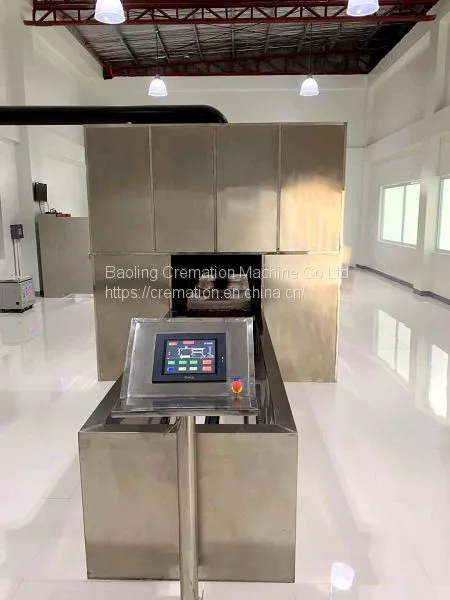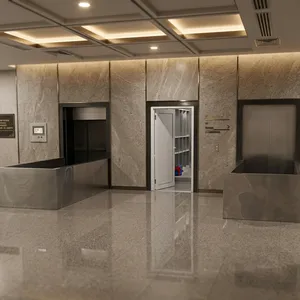

 Business License

Cremation Furnace & Human Cremation Machine Guide
Published on July 29, 2026.
The demand for a reliable human cremation machine has never been higher. According to the National Funeral Directors Association (NFDA), the U.S. cremation rate reached 60.5% in 2022 and is projected to reach 63.5% by 2025 (NFDA, 2023 Cremation and Burial Report). For funeral homes and municipalities planning capital equipment, selecting the right cremation furnace is a decision that shapes compliance, operating cost, and community reputation for a decade. This guide explains how modern cremation systems work, which regulations matter, and how to evaluate suppliers with confidence.
Industry Background: Why Cremation Equipment Demand Is Rising
Cremation has shifted from a niche option to the default choice across many markets. The Cremation Association of North America (CANA) reports that the U.S. cremation rate crossed 50% in 2016 and reached roughly 57.9% by 2021 (CANA, 2022 Annual Statistics Report). NFDA's longer-range projection places the national rate near 69.8% by 2030 and above 80% by 2045 (NFDA, 2023 Cremation and Burial Report).
(Update note: Figures citing pre-2023 reports are retained for trend context; verify current rates against the latest CANA and NFDA annual releases before quoting in proposals.)
Two forces drive replacement and new purchases:
Capacity pressure — rising volumes push older units past their design limits, increasing downtime.
Tightening emissions rules — regulators now expect documented, continuously monitored stack performance rather than periodic spot checks.
For operators in Europe, the European Commission's Industrial Emissions Directive (IED 2010/75/EU) and the associated BREF for Waste Incineration (revised 2019) set binding BAT-associated emission limit values for dioxins, furans, dust, and acid gases (European Commission, DG ENV). In England and Wales, crematoria operate under the Environment Agency's Environmental Permitting Regulations, which require abatement and annual emissions reporting (UK Environment Agency).
What Defines a Compliant Modern Cremation Furnace
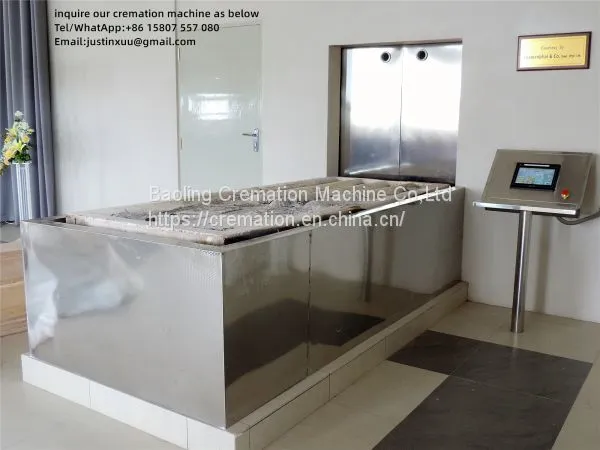
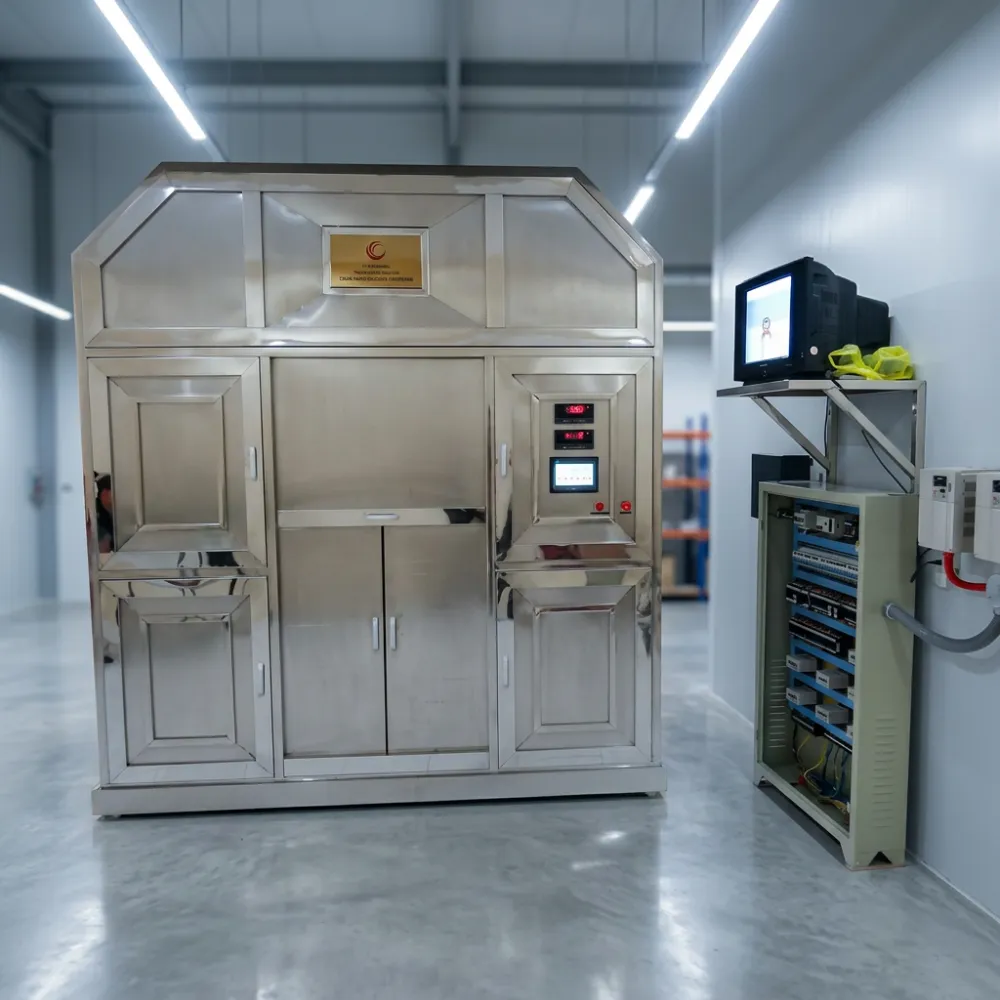
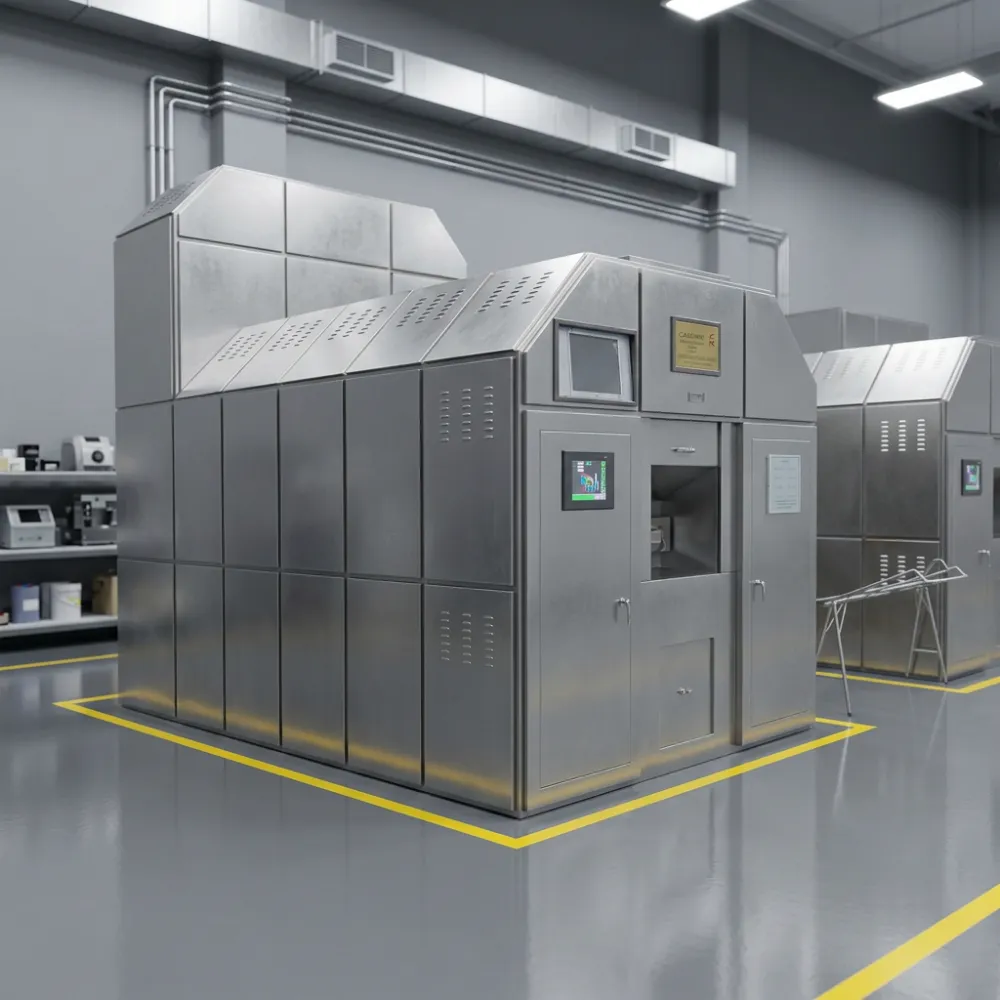
A contemporary human cremation machine is fundamentally different from the atmospheric burners of 20 years ago. The specifications published across leading supplier catalogs point to a clear baseline:
Secondary combustion chamber — maintains temperatures above 800–900°C to break down particulates and odors, the technical basis for "no-smoke" claims.
PLC intelligent control — programmable logic controllers manage ramp rates, fuel-air ratio, and safety interlocks, reducing operator error.
Multi-fuel flexibility — natural gas, LPG, and diesel configurations let buyers match local energy availability and price.
Energy recovery — recuperative burners and insulated refractory reduce per-cremation fuel draw; catalog units commonly list 18 kW rated power with energy-saving operation.
Emission-classed construction — "Europe Standard" units are built to meet EU stack limits, relevant for buyers exporting to or operating within the EU.
When a supplier lists "Europe Standard emission" and "no smoke," the underlying question for a buyer is whether those claims are backed by third-party test reports and the specific directive version cited. Always request the test certificate reference.
How to Choose an Environmentally Friendly Cremation Furnace for a Funeral Home
This is the question most procurement teams actually type into Google, so we address it directly. A structured evaluation avoids costly mismatches:
Confirm the regulatory target first. Identify the emission standard your authority enforces (EU IED, UK EPR, U.S. state/local air permits, or other). Your furnace specification must name that standard, not a generic "eco" label.
Match capacity to volume. Estimate weekly cremations and coffin-size range. Oversized units waste fuel; undersized units bottleneck during peak seasons.
Verify the combustion architecture. Insist on a primary plus secondary chamber with documented chamber temperature. Single-chamber "no-smoke" claims deserve extra scrutiny.
Check fuel and power fit. Confirm 220V/380V compatibility and whether natural gas, LPG, or diesel best suits your site. Multi-fuel units future-proof against supply shifts.
Request the control and safety spec. PLC control, flame failure protection, and door-interlock systems are now baseline for safe, repeatable operation.
Ask for the evidence. Demand third-party emission test reports, CE or local certification, and reference installations you can contact.
Model total cost of ownership. Purchase price is a fraction of a 10–15 year life; factor fuel, refractory replacement, abatement media, and service access.
A human cremation machine chosen this way protects both compliance and margin — the two things that decide whether an upgrade pays back.
What the Specifications Deliver for Buyers
Rather than an anonymous case study, we ground outcomes in the published specifications of current catalog units, which operators can validate against quoted offers:
Documented low-emission operation — units listed as "Europe Standard emission / no smoke / no smell" target the regulatory thresholds above when paired with proper abatement.
Automation that cuts labor risk — "Full Automatic" and "PLC Intelligent Control" listings describe one-operator workflows with programmable cycles.
Fuel adaptability — "Multi-Fuel Natural Gas / LPG / Diesel" units let a funeral home switch energy sources as contracts change.
Mobility for special cases — "Container Mobile" and "Portable Removable" configurations serve remote areas and emergency or disaster-cremation scenarios.
Low entry barrier — most listings show MOQ of 1 set/unit, allowing a single-unit pilot before fleet expansion.
These are the spec-level benefits buyers should confirm during a supplier audit; per-cremation fuel savings and payback periods vary with local energy prices and must be calculated against your own volume.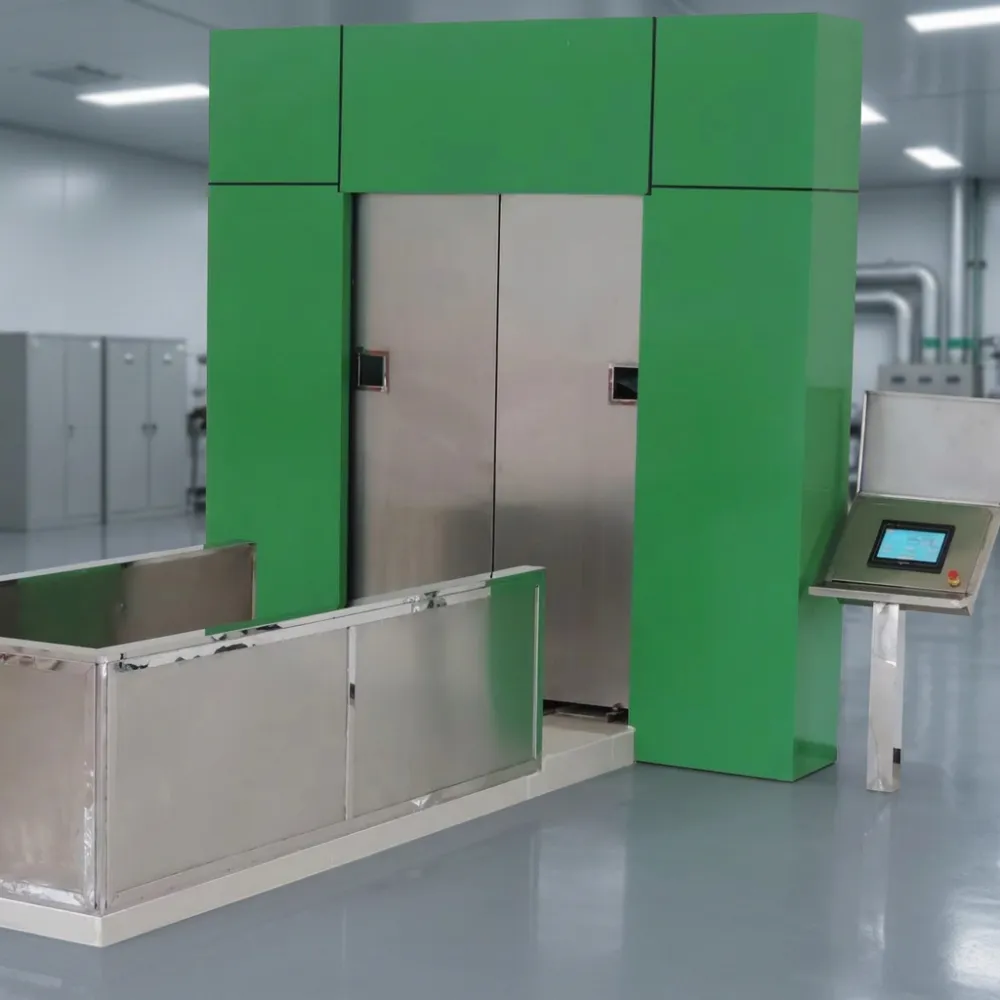
FAQ
What is the typical minimum order quantity for a cremation furnace?Most supplier listings show an MOQ of 1 set or 1 unit, so a single pilot machine is normally feasible. Containerized or fully customized builds may carry different terms, confirmed at quotation.
How long is the lead time for a human cremation machine?Lead time depends on configuration (standard vs. PLC-customized), certification paperwork, and shipping method. Air freight shortens delivery for urgent replacements; sea freight lowers cost for planned rollouts. Confirm the dated production schedule in writing before ordering.
Can the equipment be customized to local emission standards?Reputable manufacturers offer configuration to named standards — for example, EU IED-aligned emission builds or region-specific voltage and fuel setups. Always specify your target standard in the inquiry and require the matching test certificate in the deliverables.
Conclusion
Choosing a cremation furnace is less about finding the cheapest unit and more about matching a human cremation machine to your regulatory environment, volume, and energy profile. Start by naming the standard you must meet, then validate combustion architecture, control system, and third-party evidence before you compare prices. Explore the full range of compliant, automated cremation systems and specification sheets to shortlist the configuration that fits your operation — and speak with a supplier who can document every claim with test data.
Recently Posted
-
Refractory Brick Grades for Cremation Furnaces: Silicon Carbide vs. High Alumina vs. Mullite
August 11, 2026A crematorium in South America replaced its primary chamber refractory lining with what the supplier called "standard furnace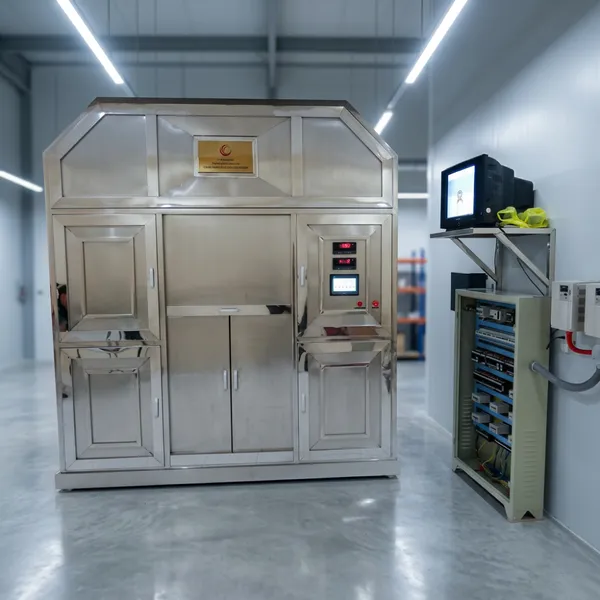 Read More
 -
What Defines a Modern Cremation System: Core Components and Operational Parameters Explained
August 10, 2026Not long ago, a funeral home operator in Eastern Europe took delivery of what the invoice called a "complete cremation system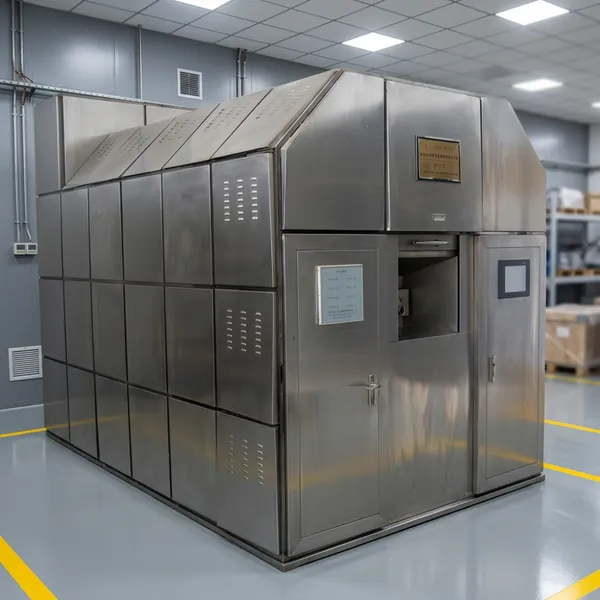 Read More
 -
Mobile Cremation Furnace for Remote Use
July 29, 2026Published on July 29, 2026.A mobile cremation furnace solves a problem fixed infrastructure cannot: delivering dignified, complian
Read More -
Human Cremation Machine Safety Guide
July 29, 2026Published on July 29, 2026.A human cremation machine operates at extreme temperatures with combustible fuel and moving parts — saf Read More

Contact Us
Recommended Products
-
 Human Cremation Machine Electric Crematorium Machine With 100kg/H Capacity and 18kw Power Crematory EquipmentNegotiableMOQ: 1 Piece
 -
220V/380V Full Automatic Human Crematorium Cremation Machine New Crematory Furnace 18kW Power PLCNegotiableMOQ: 1 Piece
-
New Full Automatic Human Crematory Incinerator Oven No Smoke Cremation Machine Crematory Equipment Crematorium MachineNegotiableMOQ: 1 Set
-
Electric Human Crematorium Machine Full Automatic Cremation Incinerator Indonesia Extra Large Coffin Cremation Electric Human Crematory MachineNegotiableMOQ: 1 Piece
-
Extra Large Coffin Cremation Machine New Technology Human Crematorium Furnace Full Automatic 100kg/h 5-Year WarrantyNegotiableMOQ: 1 Set
-
Human Cremation Machine for Sale Full Automatic Model USA TypeNegotiableMOQ: 1 Set
-
220V/380V Full Automatic Human Crematorium Cremation Machine Crematory Furnace 18kW Power PLC ControlNegotiableMOQ: 1 Set
-
Automatic Human Cremation Machine No Smell No Smoke Latest Human Cremation Technology 50/60HZ Diesel LPG CremationNegotiableMOQ: 1 Set
-
Automatic Human Crematorium Incinerator Crematory Furnace Human Cremation Machine for Wood Coffin CremationUS$ 66000MOQ: 1 Set
-
Electric Human Crematory Machine Cremation Machine No Smoke Crematorium Incinerator Cremation EquipmentUS$ 55000MOQ: 1 Combo
-
220V/380V Full Automatic Human Crematorium Cremation Machine New Crematory Furnace 18kW Power PLC Core Refractory Material 1NegotiableMOQ: 1 Set
-
Cremation Machine Burn Human Body Electrical Crematorium Machine Cremator Crematoria Europe StandardUS$ 5MOQ: 1 Set
-
Cremation System Cremation Oven Fired by Natural Gas no Smoke Human Crematorium Incinerator Crematory EquipmentNegotiableMOQ: 1 Piece
-
Cremation Equipment for Sale Eu Standard Environmental Friendly no Smoke Quick Burning Fast Short Time Cremation Machine No SmellUS$ 1 - 10MOQ: 1 Set
-
Crematorium Oven Machine Container Burn Human Body Mobile Furnace for Sale Crematory Incinerator Cremation Machine Crematory EquipmentUS$ 1 - 10MOQ: 1 Set
-
Container Crematory System Burn Human Death Body Crematoria Emergency Human Cremation Machine Crematorium IncineratorUS$ 1 - 10MOQ: 1 Set
-
Cremation Machine for Australia Market no Smell Human Crematory Machine Automatic Loading Conveyor Cremation EquipmentNegotiableMOQ: 1 Set
-
Global Top Supplier of Crematory Equipment Human Cremators Crematory Equipment Cremation Unit no Smell no SmokeNegotiableMOQ: 1 Kilogram
-
Cremation Machine Human Crematory Burner Equipment Furnace on Wheels Cremation Machine no Smoke USA StandardUS$ 1 - 10MOQ: 1 Piece
-
Automatic Cremation Machine Crematory Equipment for Human Crematorium Equipment Europe Standard EmissionUS$ 1 - 10MOQ: 1 Piece