
 Business License

Cremation Equipment for Municipal Crematoriums: High-Volume Solutions for Urban Population Centers
A municipal crematorium in a Southeast Asian city of roughly two million people found itself operating at 130% of its design capacity. Three cremation machines, each rated for six cycles per day, were running eight to nine cycles daily, with maintenance windows squeezed into the two hours between midnight and 2 AM. Equipment failures had become a question of when, not if. When the oldest unit's refractory lining finally gave way, the facility scrambled to redirect cases to a private crematorium fifty kilometers away — at roughly triple the per-case cost — for the six weeks it took to complete the repair.
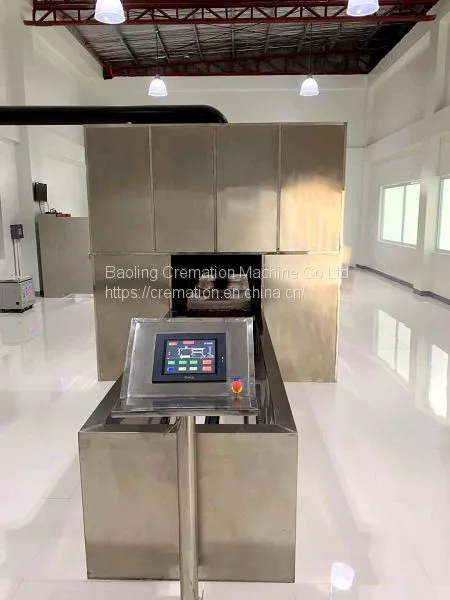
This scenario is not unique to one city. Urban populations are growing, cremation rates are climbing across much of the world, and municipal crematorium equipment that was adequate a decade ago is struggling under the load. The challenge for city planners and facility managers is not simply buying more machines — it is configuring the right machines in the right layout, with the right support systems, to handle peak demand without breaking budgets or compromising regulatory compliance. This article looks at what high-volume municipal cremation looks like in practice and how equipment decisions made at the procurement stage determine operating performance for the next fifteen to twenty years.
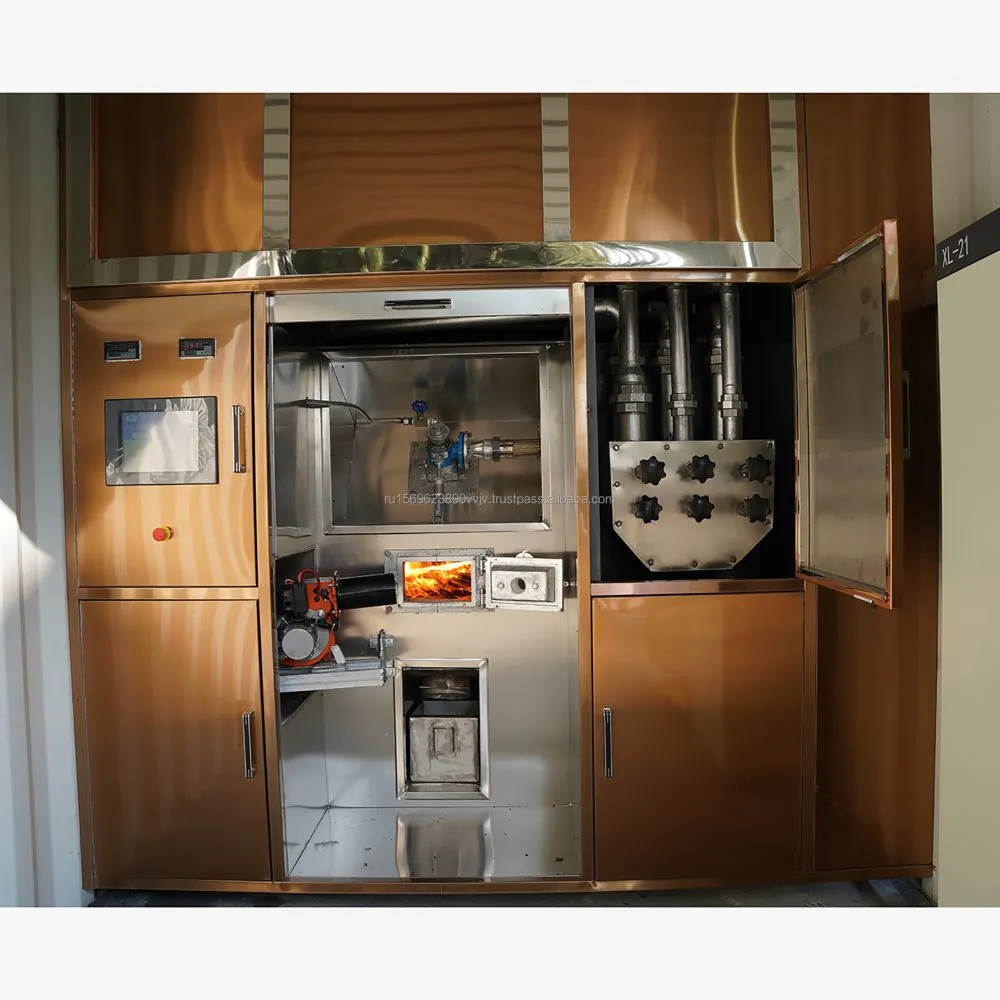
1. The Throughput Equation: How Many Machines Does a City Need?
Sizing a municipal cremation facility starts with a straightforward calculation that most cities get wrong on the first attempt. The formula is: annual deaths in the service area, multiplied by the local cremation rate, divided by 365, then divided again by the sustainable daily cycle count per machine. The result is the minimum number of cremation machines needed under steady-state conditions. Then comes the part that gets missed: a peak-day multiplier, typically 1.3× to 1.5×, to account for seasonal mortality patterns and the statistical clustering of deaths that produces days with 40% more cases than the annual average.
A city of one million people with a cremation rate of roughly 60% and an annual death rate of roughly 7 per 1,000 generates roughly 4,200 cremations per year, or roughly 11.5 per day on average. A machine rated for six cycles per day can handle that average — barely — but on a peak day of sixteen cases, the single machine falls short. The city either queues cases into the next day (delaying funerals and straining cold storage) or invests in a second machine that sits under-utilized for roughly 300 days per year. The better answer, which Jinjiben Trading has helped several municipal clients evaluate, is two machines with the ability to surge to eight cycles each on peak days through faster cycle profiles and overlapping operation.
2. Machine Configuration: Single Large vs. Multiple Medium Units
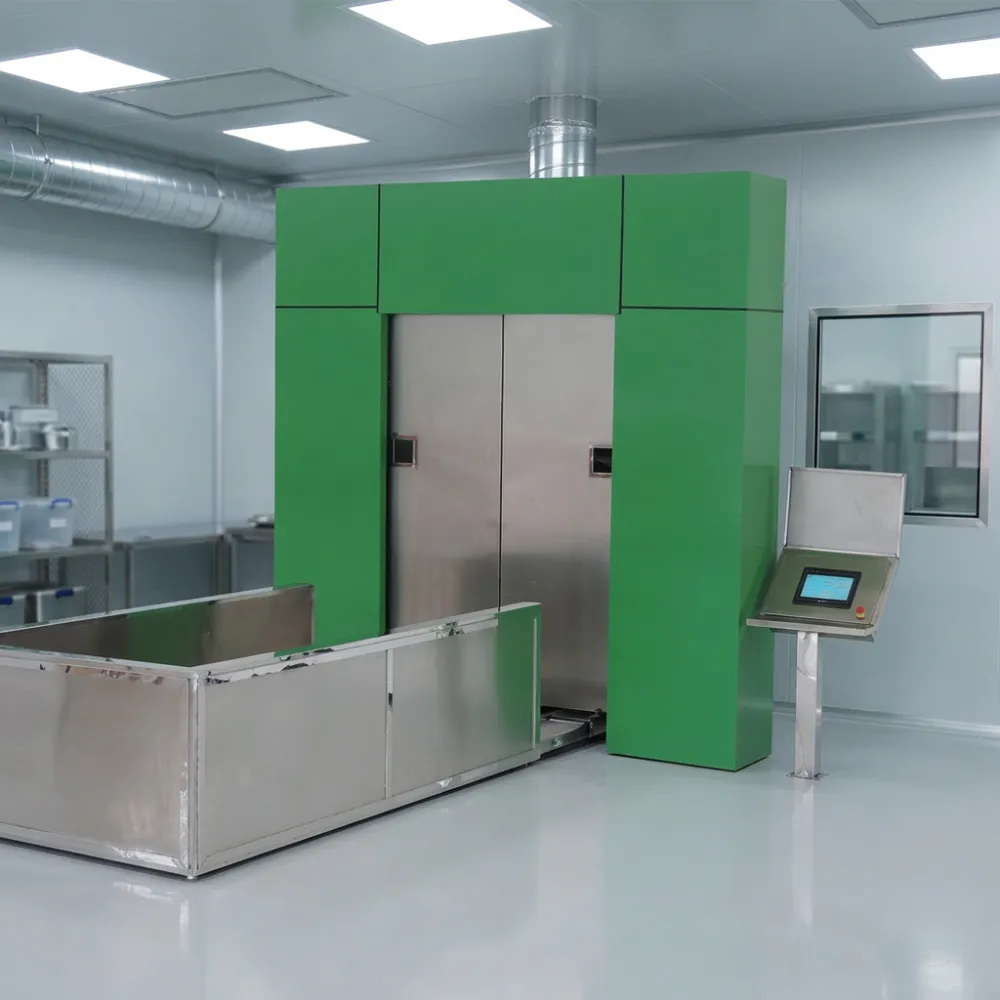
Municipal buyers face a choice between installing fewer large-capacity cremation machines or more medium-capacity units. A large machine rated for eight to ten cycles per day costs roughly 25% to 35% less per unit of throughput than two medium machines rated for five cycles each. The capital cost math favors the single large unit. The operational math does not.
When a single machine goes down for maintenance — and every machine eventually does — the facility's throughput drops to zero for the duration of the repair. Two medium machines in the same facility maintain 50% capacity during a single-unit outage. For a municipal crematorium serving a population that cannot easily redirect cases to alternative facilities, that redundancy is not a luxury. Furthermore, two machines allow one to run a standard cycle profile while the other runs an accelerated profile, accommodating cases that arrive in clusters — a funeral service at 10 AM followed by another at 11 AM naturally creates a two-case surge within a single hour.
| Configuration | Daily Capacity (Standard) | Daily Capacity (Surge) | Redundancy During Single-Unit Outage | Typical Capital Cost |
|---|---|---|---|---|
| 1 × Large (8–10 cycles/day) | 8–10 | 10–12 | 0% | Baseline (1×) |
| 2 × Medium (5 cycles/day each) | 10 | 14–16 | 50% | 1.25×–1.35× |
| 3 × Medium (5 cycles/day each) | 15 | 18–21 | 67% | 1.60×–1.80× |
3. Layout Design: Flow, Separation, and Future Expansion
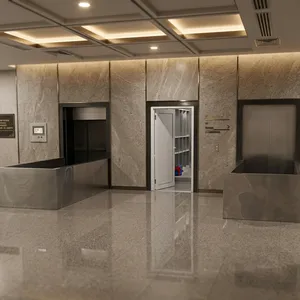
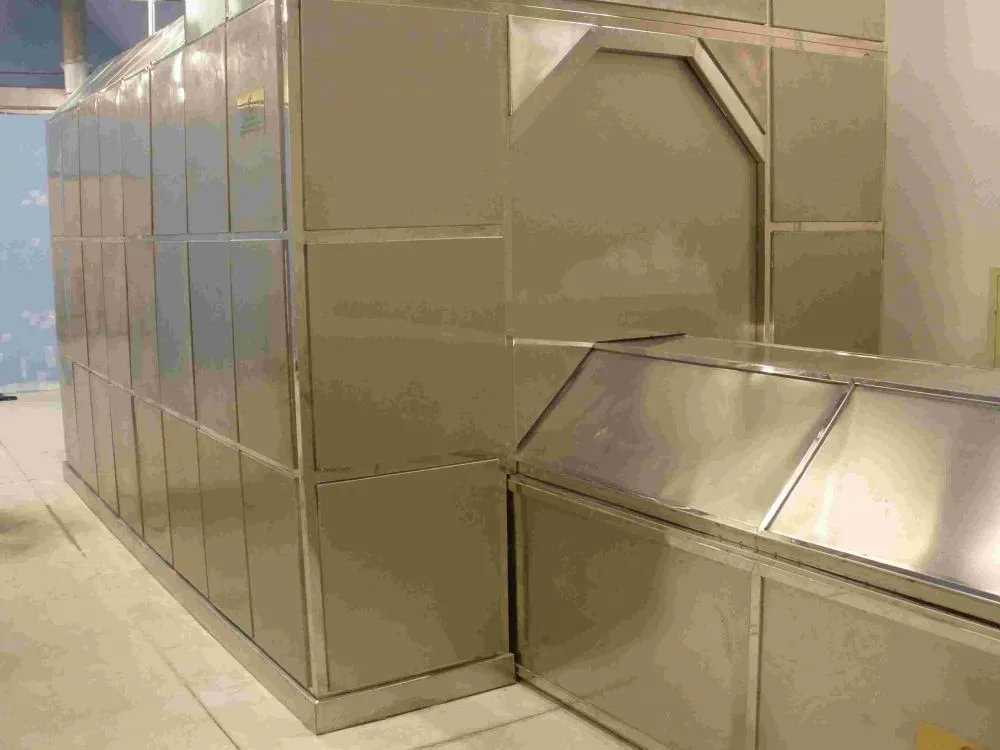
The physical arrangement of crematorium equipment inside a facility has as much impact on daily throughput as the machines themselves. Poor layout creates bottlenecks at the loading bay, the ash-processing station, or the viewing corridor that no amount of machine speed can compensate for. A well-designed municipal crematorium separates three flows: the arrival and preparation of cases (dirty flow), the movement of families and visitors (clean flow), and the handling of cremated remains and documentation (administrative flow).
Machine placement within the technical zone should allow a single operator to monitor two machines from a central control station, with sight lines to both loading doors. The ash-processing station — cremulator, magnetic separator, and collection area — should sit equidistant from all machine hearths to minimize the distance an operator walks with a collection tray. In facilities Jinjiben has helped lay out, reducing ash-processing transit distance from roughly thirty meters to under ten meters per cycle saved roughly twenty minutes of operator time across an eight-cycle day — time that translated directly into capacity for one additional cycle.
Future expansion is another layout consideration that costs almost nothing at the design stage but becomes extremely expensive later. Leaving a prepared bay — foundation pad, utility stub-outs, and flue duct connection point — for a third or fourth machine adds roughly 3% to 5% to initial construction cost. Adding that same bay after the building is complete typically costs three to five times as much due to demolition, re-routing of utilities, and extended downtime for the operating machines.
4. Fuel Infrastructure for High-Volume Operation
A cremation machine running eight cycles per day on natural gas consumes roughly 100 to 140 cubic meters daily. Multiply by two or three machines, and the facility's gas demand rivals a small industrial boiler plant. The gas supply pipe diameter, meter capacity, and regulator station must be sized for peak simultaneous draw — all machines firing at full rate during the overlapping portion of their cycles — not for average daily consumption.
For diesel-fired municipal facilities, fuel storage becomes the critical infrastructure element. A dual-machine facility consuming roughly 30 to 40 liters per cycle across sixteen daily cycles burns roughly 500 to 650 liters per day. A storage tank sized for seven days of autonomy (roughly 3,500 to 4,500 liters) plus a day tank at each machine for uninterrupted supply during bulk tank refilling represents a reasonable baseline. Municipalities in regions with seasonal fuel delivery disruptions — monsoon seasons in parts of South and Southeast Asia, for example — should consider ten to fourteen days of storage capacity as a buffer.
5. Emission Compliance at Scale
Municipal crematorium equipment attracts more regulatory scrutiny than private facilities simply because of its visibility and throughput. A three-machine municipal crematorium processing roughly 5,000 cases per year emits roughly ten to fifteen times the annual pollutant load of a single-machine private facility. Regulators notice, and neighbors notice.
Continuous emissions monitoring (CEM) is increasingly mandatory for municipal facilities above certain throughput thresholds. Where it is not yet mandatory, it is becoming a de facto requirement through public pressure and local ordinances. The cost of retrofitting a CEM system onto machines not originally designed for it — adding sampling ports, mounting racks, and PLC interface modules — is roughly 40% to 60% higher than specifying CEM-ready equipment at the time of purchase. For municipal buyers planning a new facility, specifying CEM-ready machines from the start, even if the current regulatory framework does not require continuous monitoring, is a low-cost hedge against almost certain future requirements.
6. Heat Recovery: Turning a Cost Center into an Asset
A municipal crematorium produces roughly 250 to 350 kWh of thermal energy per cremation cycle in the form of hot flue gas — energy that, in most facilities, is vented to atmosphere after passing through the emission treatment train. Heat recovery systems capture a portion of this energy — typically 40% to 60% — through a flue gas-to-water heat exchanger and use it for facility heating, hot water supply, or, in a few advanced installations, district heating networks.
The economics depend on local energy prices and climate. In Northern and Eastern Europe, where heating season runs six to eight months per year and natural gas prices are relatively high, a heat recovery system on a three-machine municipal crematorium can offset roughly 60% to 80% of the facility's annual heating cost, achieving payback in roughly four to seven years. In tropical climates where space heating demand is negligible, the recovered heat can pre-heat combustion air for the burners — a smaller efficiency gain, typically 3% to 5% reduction in fuel use, but one that requires minimal additional equipment beyond a simple air-to-air heat exchanger.
7. Cold Storage and Case Handling at Municipal Scale
High-volume municipal cremation requires cold storage capacity sized for peak queuing, not average throughput. If a crematorium receives an average of twelve cases per day but can experience a three-day weekend backlog of roughly twenty cases arriving Sunday night for Monday processing, the cold storage must accommodate that peak inventory — roughly twenty body trays or compartments — not the daily average of twelve.
Refrigeration system redundancy follows the same logic as machine redundancy. A single compressor failure in a municipal facility holding twenty cases represents an unacceptable risk of remains degradation and the regulatory and reputational consequences that follow. Duplex compressor systems with automatic failover, or two independent refrigeration circuits each sized for 60% to 70% of total load, provide protection against single-point failures. The incremental cost of redundant refrigeration is roughly 15% to 25% of the total cold storage capital cost — a modest premium for eliminating a risk that, if realized, would shut down the entire facility.
Not long ago, a municipal facility in Latin America that Hunan Jinjiben Trading Co Ltd supplied with two cremation machines learned this lesson the hard way. A single-compressor cold storage system failed during a holiday weekend, and the backup plan — a refrigerated truck contracted from a logistics company — arrived eight hours after the failure was detected. The facility now operates with duplex compressors, and the upgrade, while adding roughly USD 12,000 to the initial budget, has prevented a repeat of that event through three subsequent compressor cycles.
8. Operator Staffing and Shift Design for 24-Hour Facilities
Many municipal crematoriums operate beyond standard business hours, either continuously or with extended evening and weekend shifts. A facility running sixteen hours per day, seven days per week, requires roughly four to five full-time-equivalent operators to cover the schedule with reasonable overtime and leave coverage. Each operator should be trained on all machines in the facility — cross-training eliminates the single-point dependency where one machine sits idle because the only trained operator for that unit is on leave.
PLC-controlled cremation machines reduce the training burden compared to older relay-logic units because the operator selects a profile rather than manually managing burner modulation, chamber pressure, and flue gas temperature throughout the cycle. A new operator can typically run a PLC-controlled machine independently after roughly forty to sixty hours of supervised operation, compared to roughly 120 to 160 hours for a manually controlled unit. For a municipal facility hiring and training two to three operators per year due to normal turnover, the training time difference alone justifies the PLC premium within the first two years.
9. Frequently Asked Questions About Municipal Cremation Equipment
9.1 How many cremation machines does a typical municipal crematorium need?
For cities of roughly 500,000 to 1 million people with cremation rates of 50% to 70%, two medium-capacity machines (five to six cycles per day each) is the most common configuration. Cities above 2 million people with high cremation rates may need four to six machines. The number is determined by peak-day demand, not annual average, and should include at least one machine of redundancy for maintenance coverage. We typically recommend that municipal clients size for peak day plus one spare unit.
9.2 What is the typical lifespan of a municipal cremation machine?
With proper maintenance and refractory relining at the recommended intervals, a well-built cremation machine in municipal service should operate for roughly fifteen to twenty years before major structural components — the steel shell, door mechanisms, and flue ductwork — reach end of life. The control system may be upgraded once or twice during that period as PLC technology evolves, but the mechanical core of the machine should remain serviceable through multiple relining cycles.
9.3 Can municipal crematoriums serve private funeral homes as well?
Yes, and this is common practice in many regions. A municipal crematorium with spare capacity can accept cases from private funeral homes on a fee-per-service basis, generating revenue that offsets a portion of the facility's operating cost. The arrangement requires clear protocols for case acceptance, documentation, and chain-of-custody, but from an equipment standpoint the same machines handle both municipal and private cases without modification.
Recently Posted
-
Hunan Jinjiben Trading Co., Ltd.: Your Partner for Cremation Equipment Sourcing from China
August 14, 2026When a funeral industry buyer begins searching for cremation equipment from China, the landscape can feel overwhelming. Hundreds o Read More
 -
How to Evaluate a Cremation Equipment Supplier: 10 Decision Factors Beyond Price
August 13, 2026A funeral home operator in Eastern Europe received two quotations for a cremation machine within the same week. Supplier A quoted Read More
 -
Refractory Brick Grades for Cremation Furnaces: Silicon Carbide vs. High Alumina vs. Mullite
August 11, 2026A crematorium in South America replaced its primary chamber refractory lining with what the supplier called "standard furnace
Read More -
What Defines a Modern Cremation System: Core Components and Operational Parameters Explained
August 10, 2026Not long ago, a funeral home operator in Eastern Europe took delivery of what the invoice called a "complete cremation system Read More

Contact Us
Recommended Products
-
 Human Cremation Machine Electric Crematorium Machine With 100kg/H Capacity and 18kw Power Crematory EquipmentNegotiableMOQ: 1 Piece
 -
220V/380V Full Automatic Human Crematorium Cremation Machine New Crematory Furnace 18kW Power PLCNegotiableMOQ: 1 Piece
-
New Full Automatic Human Crematory Incinerator Oven No Smoke Cremation Machine Crematory Equipment Crematorium MachineNegotiableMOQ: 1 Set
-
Electric Human Crematorium Machine Full Automatic Cremation Incinerator Indonesia Extra Large Coffin Cremation Electric Human Crematory MachineNegotiableMOQ: 1 Piece
-
Extra Large Coffin Cremation Machine New Technology Human Crematorium Furnace Full Automatic 100kg/h 5-Year WarrantyNegotiableMOQ: 1 Set
-
Human Cremation Machine for Sale Full Automatic Model USA TypeNegotiableMOQ: 1 Set
-
220V/380V Full Automatic Human Crematorium Cremation Machine Crematory Furnace 18kW Power PLC ControlNegotiableMOQ: 1 Set
-
Automatic Human Cremation Machine No Smell No Smoke Latest Human Cremation Technology 50/60HZ Diesel LPG CremationNegotiableMOQ: 1 Set
-
Automatic Human Crematorium Incinerator Crematory Furnace Human Cremation Machine for Wood Coffin CremationUS$ 66000MOQ: 1 Set
-
Electric Human Crematory Machine Cremation Machine No Smoke Crematorium Incinerator Cremation EquipmentUS$ 55000MOQ: 1 Combo
-
220V/380V Full Automatic Human Crematorium Cremation Machine New Crematory Furnace 18kW Power PLC Core Refractory Material 1NegotiableMOQ: 1 Set
-
Cremation Machine Burn Human Body Electrical Crematorium Machine Cremator Crematoria Europe StandardUS$ 5MOQ: 1 Set
-
Cremation System Cremation Oven Fired by Natural Gas no Smoke Human Crematorium Incinerator Crematory EquipmentNegotiableMOQ: 1 Piece
-
Cremation Equipment for Sale Eu Standard Environmental Friendly no Smoke Quick Burning Fast Short Time Cremation Machine No SmellUS$ 1 - 10MOQ: 1 Set
-
Crematorium Oven Machine Container Burn Human Body Mobile Furnace for Sale Crematory Incinerator Cremation Machine Crematory EquipmentUS$ 1 - 10MOQ: 1 Set
-
Container Crematory System Burn Human Death Body Crematoria Emergency Human Cremation Machine Crematorium IncineratorUS$ 1 - 10MOQ: 1 Set
-
Cremation Machine for Australia Market no Smell Human Crematory Machine Automatic Loading Conveyor Cremation EquipmentNegotiableMOQ: 1 Set
-
Global Top Supplier of Crematory Equipment Human Cremators Crematory Equipment Cremation Unit no Smell no SmokeNegotiableMOQ: 1 Kilogram
-
Cremation Machine Human Crematory Burner Equipment Furnace on Wheels Cremation Machine no Smoke USA StandardUS$ 1 - 10MOQ: 1 Piece
-
Automatic Cremation Machine Crematory Equipment for Human Crematorium Equipment Europe Standard EmissionUS$ 1 - 10MOQ: 1 Piece