
 Business License

Cremation Equipment Categories: Stationary, Mobile, and Container-Based Systems Compared
Some time ago, a regional funeral association in Southeast Asia purchased a stationary cremator for a community that had just approved cremation services. The machine itself performed well, but the site had no natural gas connection, the electrical supply could not support the burner fan on peak load, and the building permit for a permanent structure took eighteen months. The equipment sat in a warehouse for nearly a year while the community reconsidered its approach. A different platform choice would have changed the outcome completely.
This story illustrates the most common mistake in cremation procurement: treating the furnace as the decision, when the real decision is the platform. Cremation equipment today comes in three broad categories — stationary units built into a permanent structure, mobile units mounted on trailers or vehicles, and container-based systems shipped as complete factory-assembled modules. Each serves a different mix of demand, infrastructure, budget, and regulatory reality.
This article compares the three categories across capacity, installation, cost, mobility, and compliance, and maps each one to the facility types where it performs most effectively. The goal is to help buyers shortlist by platform before they compare individual machine specifications.
1. The Three Platform Categories at a Glance
Before diving into details, it helps to see the categories side by side at a high level. The three platforms differ primarily in where the equipment is built, how it reaches the site, and what the buyer must construct on site.
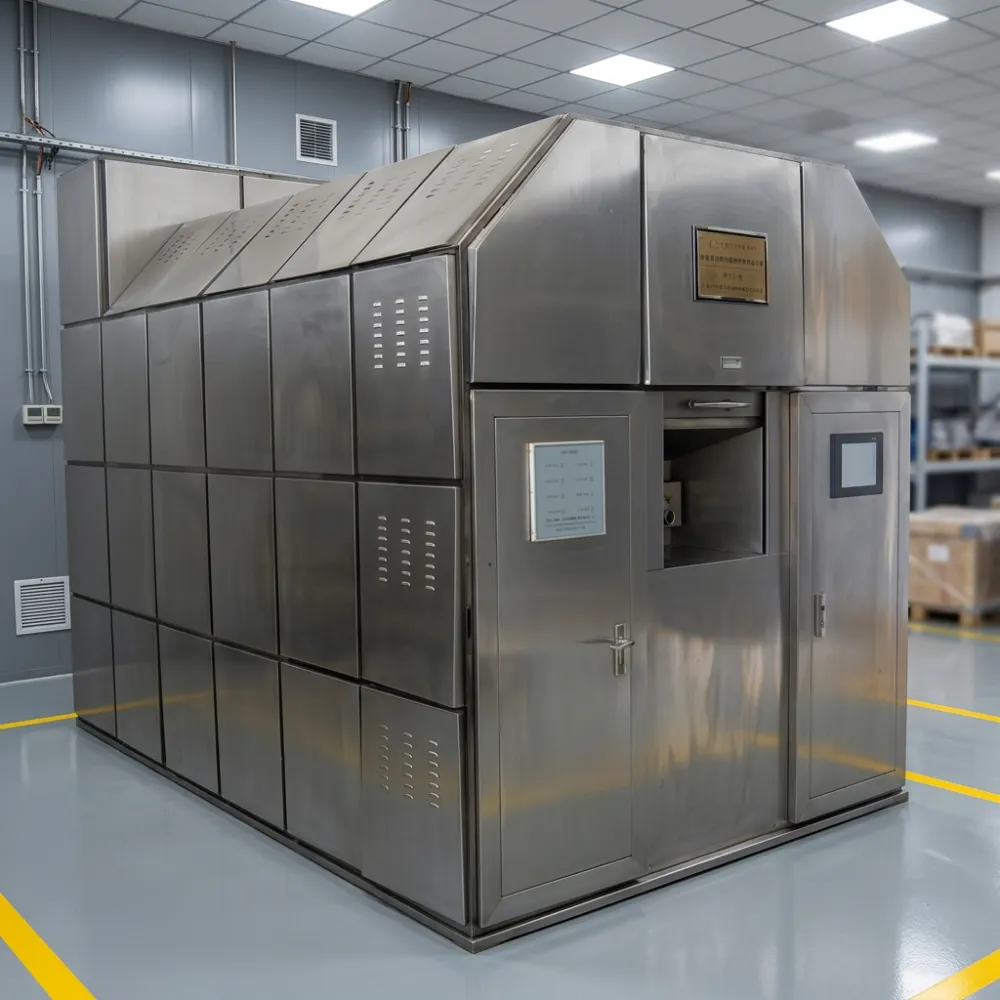
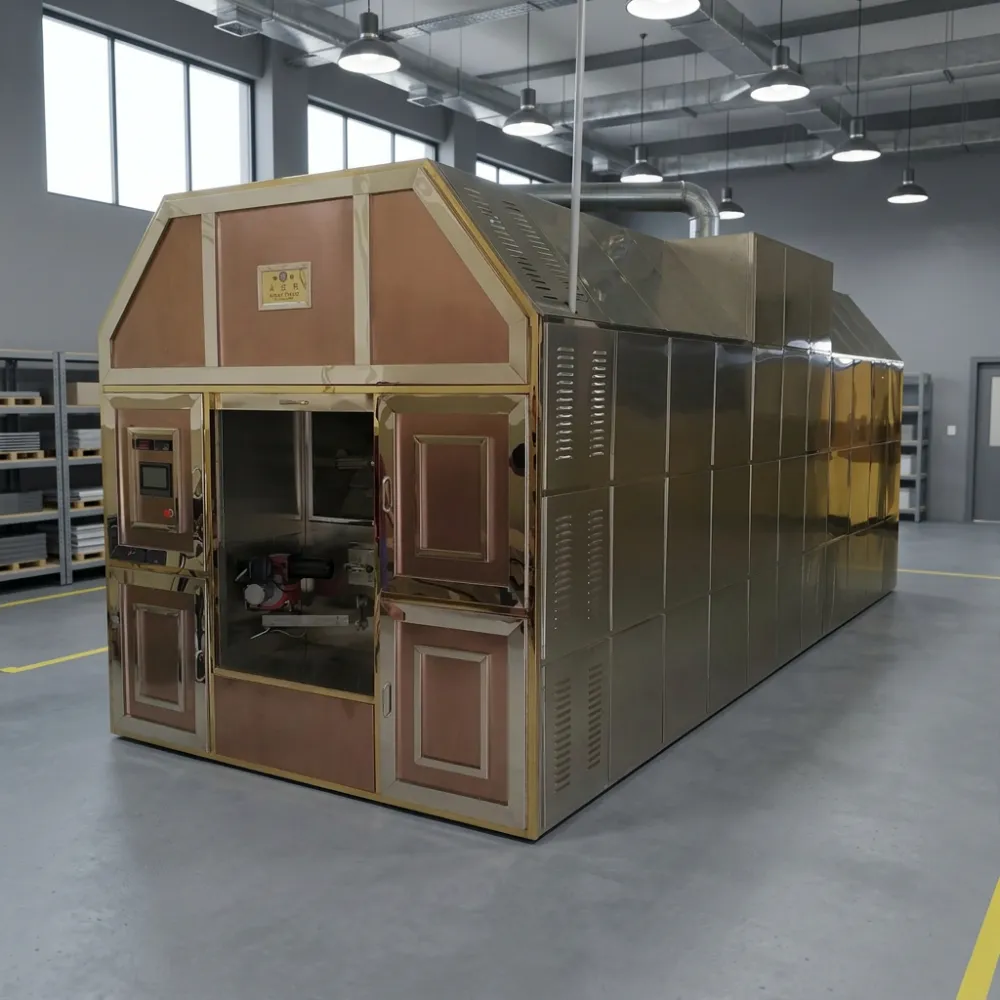
Stationary systems are installed inside a purpose-built crematorium building and are designed to operate for decades in one location. Mobile units integrate a complete cremator with its own frame, wheels, and support systems so they can travel between sites. Container-based systems house the entire cremation plant inside standard shipping containers, delivered ready to connect.
The table below summarizes the headline differences. Each category is then examined in detail in the sections that follow.
| Attribute | Stationary | Mobile | Container-Based |
|---|---|---|---|
| Typical capacity | 2–6+ cremators | 1 unit per vehicle | 1–2 units per container |
| Site civil works | Full building required | Minimal pad + utilities | Level pad + connections |
| Deployment time | 6–18 months | Days to weeks | 2–8 weeks |
| Relocatability | Not practical | High | Moderate |
| Capital cost range | Highest | Lowest per unit | Mid-range |
2. Stationary Cremation Equipment: The High-Capacity Baseline
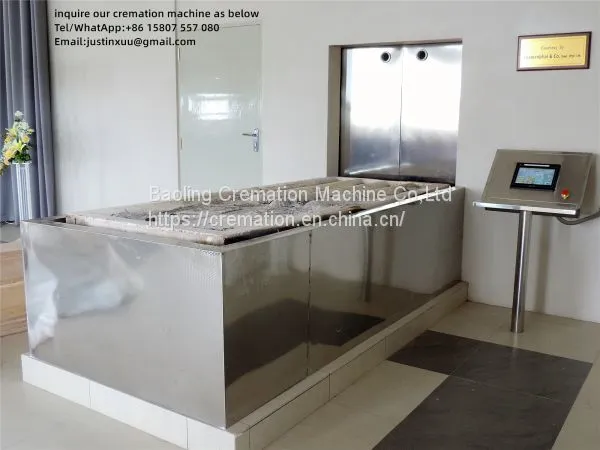
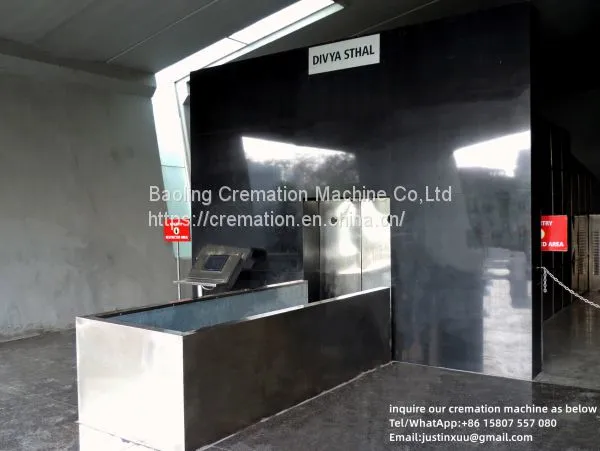
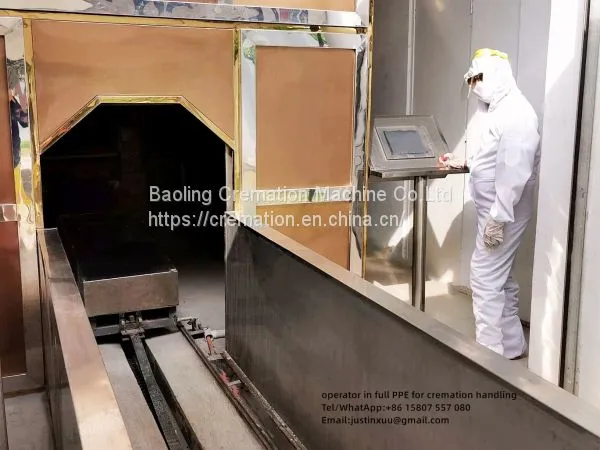
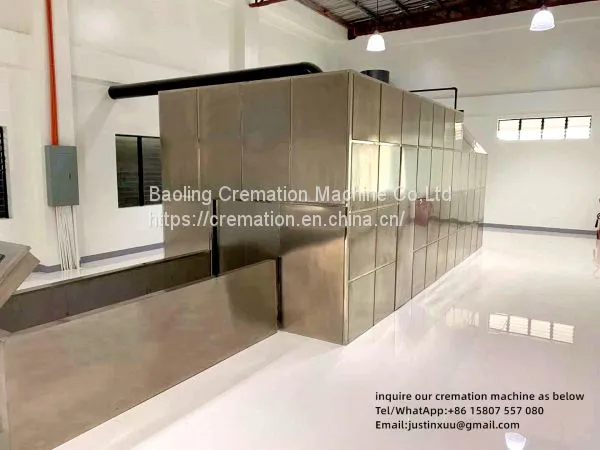
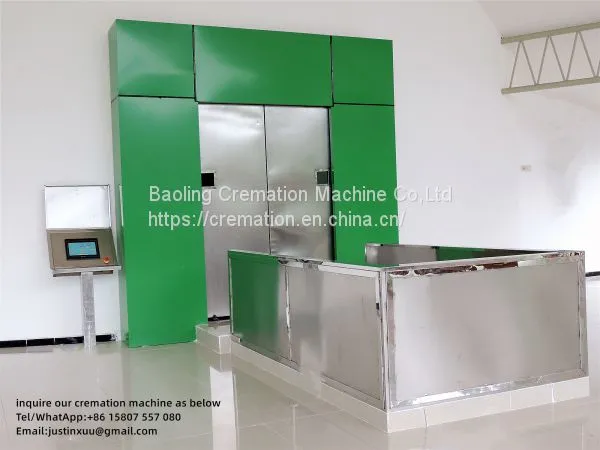
Stationary crematory equipment is the default choice for municipal crematoriums, large funeral homes, and any facility that expects consistent daily volume over a long planning horizon. A typical municipal installation houses two to six cremators, each rated for roughly 4 to 8 cycles per day, giving the facility a theoretical capacity of 8 to 48 cremations daily depending on staffing and scheduling.
The advantages of a stationary platform are durability, capacity, and upgradeability. Because the building is engineered around the equipment, designers can optimize flue routing, ventilation, acoustic treatment, and workflow for the long term. Stationary systems also accommodate the full flue gas treatment train — baghouse filters, activated carbon injection, and catalytic modules — with room for future retrofits as emission limits tighten.
The trade-offs are equally clear. Stationary projects demand the longest lead time, the largest upfront budget, and the most complex permitting. Land acquisition, environmental impact assessment, and building approval can consume more calendar time than equipment manufacturing itself, especially in urban areas where crematorium siting is sensitive. For a community that has not yet confirmed demand, committing to a stationary plant is a significant bet.
3. Mobile Cremation Units: Purpose-Built Mobility
Mobile cremation units integrate a complete cremator — combustion chambers, burner, control panel, and exhaust system — onto a trailer or vehicle chassis. They are designed for disaster-response organizations, funeral service providers covering multiple communities, and regions where permanent facilities are politically or logistically difficult to establish.
A typical mobile unit uses a single-chamber or compact dual-chamber design with a reduced flue treatment package, because height, weight, and width limits constrain the hardware. Diesel or LPG firing is common, since mobile units cannot rely on pipeline gas connections at every stop. Most mobile designs run on a generator or site power supply of roughly 30 to 60 kW.
Mobility creates real operational advantages. A single unit can serve several small communities on a rotating schedule, spreading fixed costs across a wider service area. It can also be deployed quickly when an existing crematorium closes for maintenance or when demand temporarily exceeds local capacity. Some providers park a mobile unit beside an existing facility as a supplementary stream during peak periods.
Buyers should weigh two constraints carefully. First, emissions equipment on a mobile unit is typically simpler than a stationary plant's full treatment train, which can limit deployment in jurisdictions with strict air quality rules. Second, mobile units operate with more thermal cycling and road-induced vibration, which tends to shorten refractory service life compared to a stationary installation. In our experience, a mobile cremator may require relining after roughly 1,200 to 2,000 cycles versus 3,000 to 5,000 for a well-built stationary unit.
4. Container-Based Cremation Systems: Factory-Built Modularity
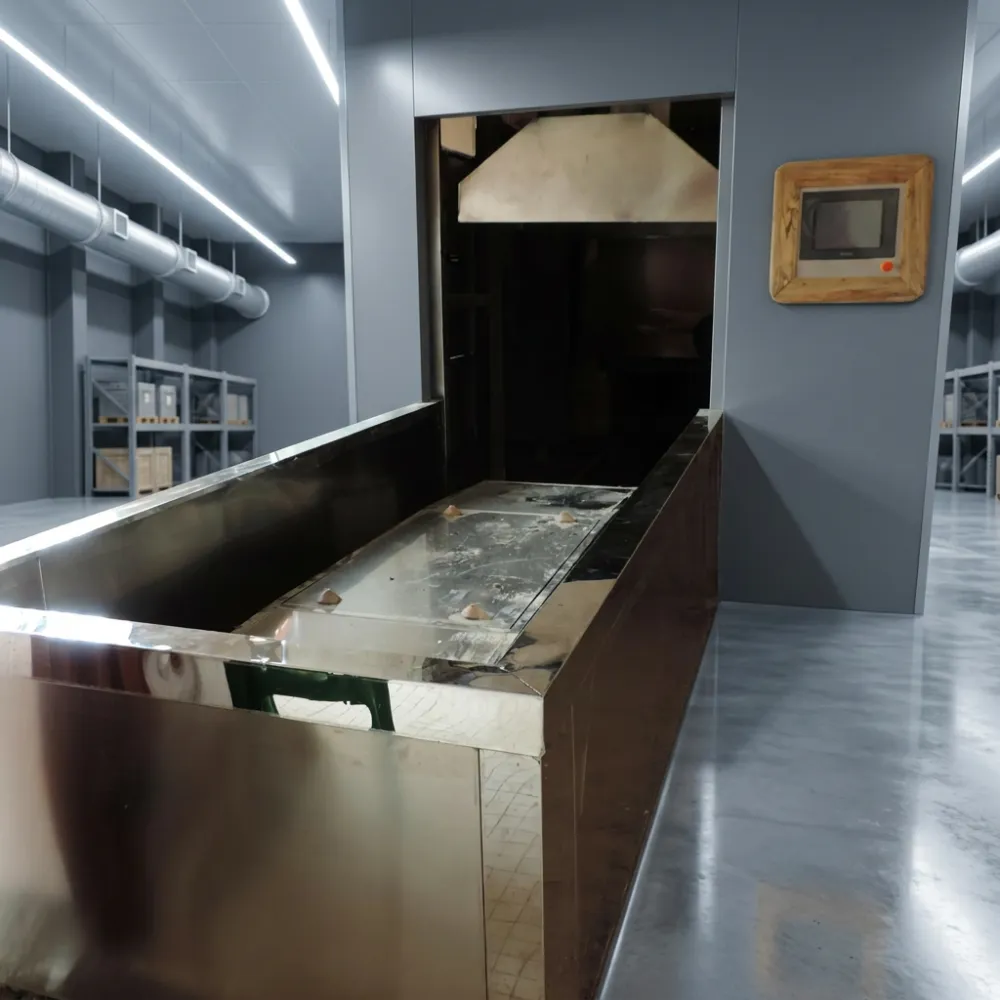
Container-based systems mount the complete cremation plant inside standard 20-foot or 40-foot ISO shipping containers. The furnace, flue treatment, control room, and sometimes a preparation area arrive pre-assembled and pre-wired from the factory, reducing on-site work to foundation pads, utility connections, and commissioning.
The appeal of the container platform is speed and predictability. Because the plant is built and tested at the factory, the buyer can witness a test burn before shipment — a level of assurance that is difficult to arrange for a site-built plant. Container systems typically reach operational status within 2 to 8 weeks of arrival, compared to months of construction for a stationary building.
Container-based plants also retain a degree of relocatability. A facility whose service area shifts, or whose lease ends, can move the container to a new site at a fraction of the cost of abandoning a permanent building. This makes the platform attractive to private operators testing a new market before committing to a permanent site.
The main limitation is scale. A single container typically houses one cremator with a compact treatment train, so throughput caps at roughly 3 to 6 cycles per day. Facilities needing higher volume either stack multiple containers or upgrade to a stationary plant once demand is proven. Stacking multiple units also creates adjacency requirements for smoke dispersion and noise that must be checked against local rules.
5. Side-by-Side Comparison of the Three Categories
To make the differences concrete, the comparison below focuses on the operational parameters that drive procurement decisions. All figures are typical ranges rather than guarantees, since individual machines vary by manufacturer and configuration.
| Parameter | Stationary | Mobile | Container-Based |
|---|---|---|---|
| Cycles per day (typical) | 4–8 per cremator | 2–4 | 3–6 |
| Flue treatment depth | Full train (baghouse + carbon + optional SCR) | Basic filtration | Medium (baghouse or dry scrubber) |
| Electrical demand | 40–80 kW per cremator | 30–60 kW total | 35–70 kW total |
| Commissioning after arrival | Weeks (tied to building completion) | 2–5 days | 1–3 weeks |
| Refractory service life | 3,000–5,000 cycles | 1,200–2,000 cycles | 2,000–3,500 cycles |
| Ideal demand profile | High, stable | Low, dispersed | Medium, uncertain |
6. Matching Platform to Facility Type
No single category fits every situation. The right platform depends on demand certainty, infrastructure, budget, and the regulatory posture of the region where the equipment will operate. The matching matrix below reflects the patterns we observe across projects in different markets.
| Facility Type | Recommended Platform | Primary Reason |
|---|---|---|
| Municipal crematorium (city) | Stationary | Volume, compliance depth, longevity |
| Large private funeral home | Stationary | Daily throughput and brand permanence |
| Small community / rural clinic | Container-based | Speed, lower civil works, relocatability |
| Multi-community service provider | Mobile | One asset serving several sites |
| Test market / temporary license | Container-based or mobile | Exit option if demand falls short |
| Island or hard-to-reach location | Container-based | Sea freight of a complete plant |
For communities still debating whether cremation will be accepted, container-based or mobile platforms offer a lower-risk entry point. Once volume materializes over one to three years, the operator can convert to a stationary plant using the same cremator core, transferring the burner and control system into the new building. This staged approach is becoming more common in markets where cremation rates are rising quickly, such as parts of Latin America and Southeast Asia.
7. Regulatory and Installation Considerations by Category
Emissions compliance does not change with platform type — the same stack limits apply whether the cremator sits in a brick building or a container. What changes is the depth of treatment hardware each platform can physically accommodate. Jurisdictions following strict regimes, such as the EU's industrial emissions framework, generally expect the full treatment train, which typically requires a stationary or large container plant.
Installation requirements also differ sharply. A stationary plant needs a building permit, foundation engineering, chimney height approval, and often a public consultation. A container-based plant may still trigger the same environmental assessment because the emissions source is identical, even though the civil footprint is smaller. Buyers should verify with local authorities whether a container plant is classified as a temporary structure or a permanent installation, since that classification drives the permitting path.
Mobile units face their own regulatory questions. Some jurisdictions restrict mobile cremation to emergency use, while others treat each deployment as a new installation requiring fresh approval. In our experience at Jinjiben, assisting buyers across Eastern Europe and Southeast Asia, the permitting question should be resolved before the equipment is ordered, because it is rarely something the manufacturer can fix after shipment.
8. Cost Structure and Total Cost of Ownership Differences
Purchase price is just the first layer of cost. The three platforms allocate spending differently across the lifecycle, and a buyer comparing invoices alone will draw the wrong conclusion. The table below separates the main cost components.
| Cost Component | Stationary | Mobile | Container-Based |
|---|---|---|---|
| Equipment purchase | Highest per unit | Lowest per unit | Mid-range |
| Civil works and building | Very high | Minimal | Low |
| Permitting timeline cost | High (delays revenue) | Low | Moderate |
| Fuel efficiency | Highest | Lower (more heat-up cycles) | Good |
| Maintenance per cycle | Lowest | Highest | Moderate |
| Relocation cost | Not applicable | Fuel and permits | Crane and transport |
A stationary plant typically achieves the lowest cost per cremation over a ten-year horizon because fuel efficiency is highest and maintenance intervals are longest. But it requires the largest capital commitment before the first cremation. A mobile unit has the smallest entry cost but the highest running cost per cycle. A container plant sits between the two, and its advantage is flexibility: it converts an uncertain market into an affordable experiment.
When we help buyers build lifecycle models at Jinjiben Trading, we ask them to project demand for at least three years, compare the cost per cremation under each platform, and add a sensitivity line for the scenario where demand falls 30% short of forecast. In most cases, that sensitivity line decides the platform.
9. How Jinjiben Trading Supports All Three Platforms
Hunan Jinjiben Trading Co Ltd works with manufacturers in Shandong that build stationary, mobile, and container-based cremation equipment, so buyers can compare platforms within a single sourcing relationship. The trading company's role is to qualify the factory, verify the configuration, and coordinate inspection before shipment.
For container and mobile projects, we arrange a witnessed test burn at the factory and document the emissions readings with the buyer's inspector present. For stationary projects, we support the specification phase — chamber sizing, flue treatment selection, and electrical configuration — and then manage the manufacturing and factory acceptance testing milestones.
One point we emphasize with every buyer: choose the platform for the right reasons. A container system purchased because a permanent building was delayed will disappoint. A stationary plant built before demand is proven will strain the operator's finances. The platform should follow the demand profile, not the other way around.
10. Frequently Asked Questions About Cremation Equipment Categories
10.1 Can a container-based cremation system meet strict emission standards?
Yes, within limits. A container plant can house a baghouse filter, dry chemical injection, and even a compact catalytic module, which is sufficient for most national standards. The constraint is physical space: the full treatment train used for the strictest European limits may not fit alongside the cremator in a single container. Buyers targeting the tightest limits should request the container layout drawing and the projected emission data before ordering, and confirm that the local authority accepts the configuration.
10.2 How long does it take to deploy a mobile cremation unit?
Assuming permits are pre-approved, a mobile unit typically reaches operational status within 2 to 5 days of arriving on site. The unit needs a level pad, electrical supply of roughly 30 to 60 kW, and a fuel source. The first commissioning burn is conducted by the manufacturer's technician, who also trains local operators on the specific unit. Deployment time is dominated by logistics and permits rather than by the equipment itself.
10.3 Is a stationary crematorium always more expensive per cremation?
Not necessarily. Over a ten-year horizon with stable demand, a stationary plant usually achieves the lowest cost per cremation because fuel efficiency is higher and refractory life is longer. The higher purchase and construction cost is spread across many more cycles. The per-cycle cost advantage disappears when demand is too low to keep the plant busy, which is why demand certainty is the decisive factor in platform selection.
10.4 Can equipment be moved from a container to a stationary building later?
In most cases, yes. The cremator core, burner, and control system can be relocated into a permanent building, while the container's treatment train may need upgrading to meet the stricter requirements that often accompany a permanent facility. Buyers planning a staged approach should specify a container plant with a standard cremator core and separable treatment components, which keeps the later transition simpler and less costly.
Recently Posted
-
International Emission Standards for Cremation: EU Directive 2010/75/EU, US EPA, and China GB 13801
September 3, 2026Some time ago, a buyer in Latin America ordered a cremation furnace that met the emission limits of his own country' Read More
 -
Stainless Steel in Cremation Equipment Construction: Grade Selection for Durability and Corrosion Re
September 3, 2026A while back, an operator in a coastal city reported recurring pitting on the outer shell of a cremator that was just four years o Read More
 -
Hunan Jinjiben Trading Co., Ltd.: Your Partner for Cremation Equipment Sourcing from China
August 14, 2026When a funeral industry buyer begins searching for cremation equipment from China, the landscape can feel overwhelming. Hundreds o Read More
 -
Cremation Equipment for Municipal Crematoriums: High-Volume Solutions for Urban Population Centers
August 13, 2026A municipal crematorium in a Southeast Asian city of roughly two million people found itself operating at 130% of its design capac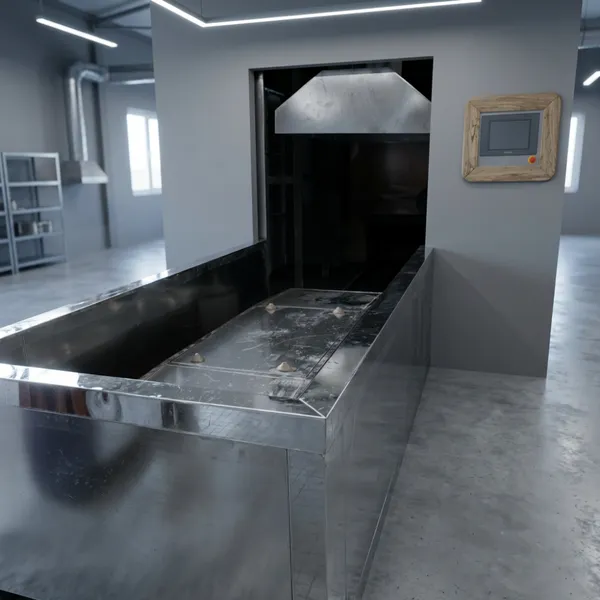 Read More

Contact Us
Recommended Products
-
 Human Cremation Machine Electric Crematorium Machine With 100kg/H Capacity and 18kw Power Crematory EquipmentNegotiableMOQ: 1 Piece
 -
220V/380V Full Automatic Human Crematorium Cremation Machine New Crematory Furnace 18kW Power PLCNegotiableMOQ: 1 Piece
-
New Full Automatic Human Crematory Incinerator Oven No Smoke Cremation Machine Crematory Equipment Crematorium MachineNegotiableMOQ: 1 Set
-
Electric Human Crematorium Machine Full Automatic Cremation Incinerator Indonesia Extra Large Coffin Cremation Electric Human Crematory MachineNegotiableMOQ: 1 Piece
-
Extra Large Coffin Cremation Machine New Technology Human Crematorium Furnace Full Automatic 100kg/h 5-Year WarrantyNegotiableMOQ: 1 Set
-
Human Cremation Machine for Sale Full Automatic Model USA TypeNegotiableMOQ: 1 Set
-
220V/380V Full Automatic Human Crematorium Cremation Machine Crematory Furnace 18kW Power PLC ControlNegotiableMOQ: 1 Set
-
Automatic Human Cremation Machine No Smell No Smoke Latest Human Cremation Technology 50/60HZ Diesel LPG CremationNegotiableMOQ: 1 Set
-
Automatic Human Crematorium Incinerator Crematory Furnace Human Cremation Machine for Wood Coffin CremationUS$ 66000MOQ: 1 Set
-
Electric Human Crematory Machine Cremation Machine No Smoke Crematorium Incinerator Cremation EquipmentUS$ 55000MOQ: 1 Combo
-
220V/380V Full Automatic Human Crematorium Cremation Machine New Crematory Furnace 18kW Power PLC Core Refractory Material 1NegotiableMOQ: 1 Set
-
Cremation Machine Burn Human Body Electrical Crematorium Machine Cremator Crematoria Europe StandardUS$ 5MOQ: 1 Set
-
Cremation System Cremation Oven Fired by Natural Gas no Smoke Human Crematorium Incinerator Crematory EquipmentNegotiableMOQ: 1 Piece
-
Cremation Equipment for Sale Eu Standard Environmental Friendly no Smoke Quick Burning Fast Short Time Cremation Machine No SmellUS$ 1 - 10MOQ: 1 Set
-
Crematorium Oven Machine Container Burn Human Body Mobile Furnace for Sale Crematory Incinerator Cremation Machine Crematory EquipmentUS$ 1 - 10MOQ: 1 Set
-
Container Crematory System Burn Human Death Body Crematoria Emergency Human Cremation Machine Crematorium IncineratorUS$ 1 - 10MOQ: 1 Set
-
Cremation Machine for Australia Market no Smell Human Crematory Machine Automatic Loading Conveyor Cremation EquipmentNegotiableMOQ: 1 Set
-
Global Top Supplier of Crematory Equipment Human Cremators Crematory Equipment Cremation Unit no Smell no SmokeNegotiableMOQ: 1 Kilogram
-
Cremation Machine Human Crematory Burner Equipment Furnace on Wheels Cremation Machine no Smoke USA StandardUS$ 1 - 10MOQ: 1 Piece
-
Automatic Cremation Machine Crematory Equipment for Human Crematorium Equipment Europe Standard EmissionUS$ 1 - 10MOQ: 1 Piece