
 Business License

Factory Acceptance Testing for Cremation Equipment: Inspection Protocols Before International Shipme
Not long ago, a funeral company imported a cremation machine after a brief video call with the manufacturer. The quotation was detailed, the payment was made, and the shipment arrived on schedule. It was then that problems surfaced: the burner configuration did not match the fuel available at the site, one control board was a different revision than the documentation, and the flue sampling port was missing entirely. Reaching a resolution across time zones took months, and the equipment stood idle while the parties argued.
Factory acceptance testing (FAT) exists precisely to prevent this outcome. FAT is a structured inspection and testing program conducted at the factory before shipment, during which the buyer — or the buyer's representative — verifies that the equipment matches the specification, functions correctly, and is ready for transport and installation. For cross-border purchases of cremation equipment, FAT is not an optional luxury; it is the lowest-cost opportunity to find and fix problems.
This article explains what FAT should cover for cremation equipment, how to structure the inspection, and what documents and test results the buyer should receive at the end.
1. What Factory Acceptance Testing Covers
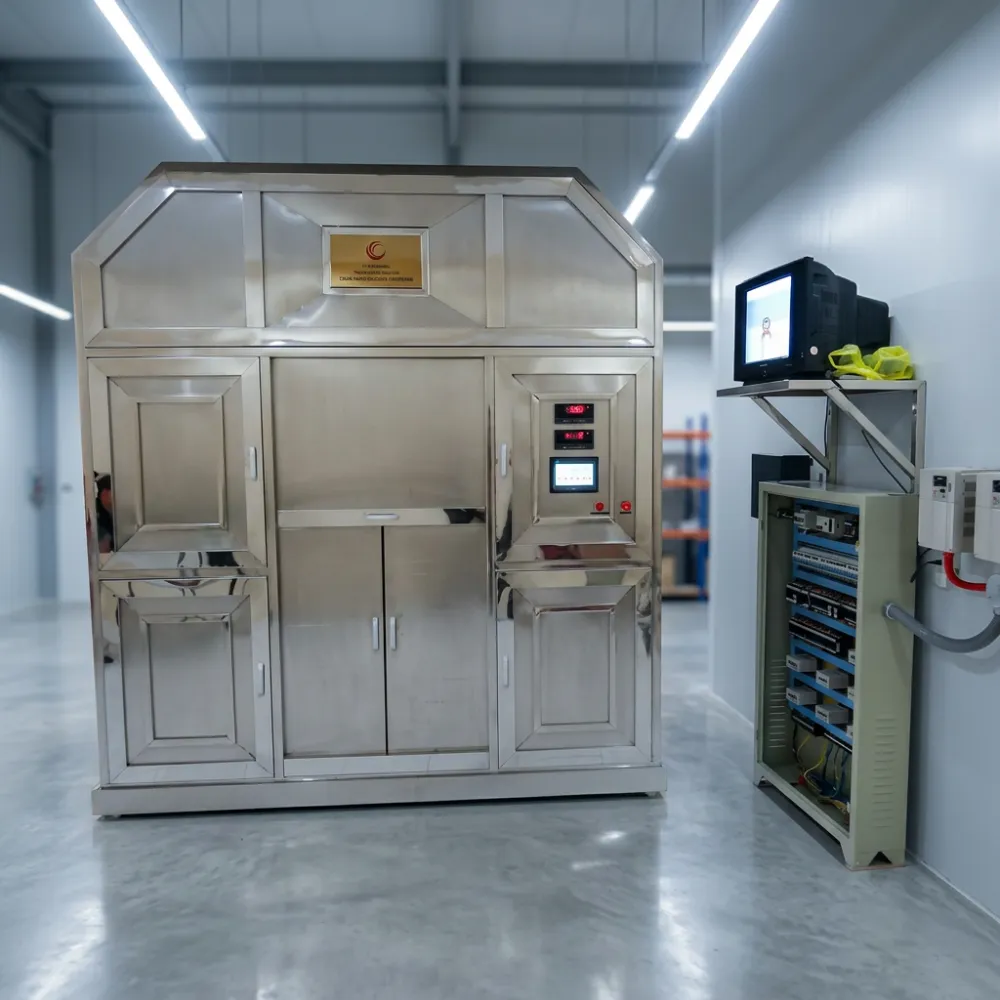
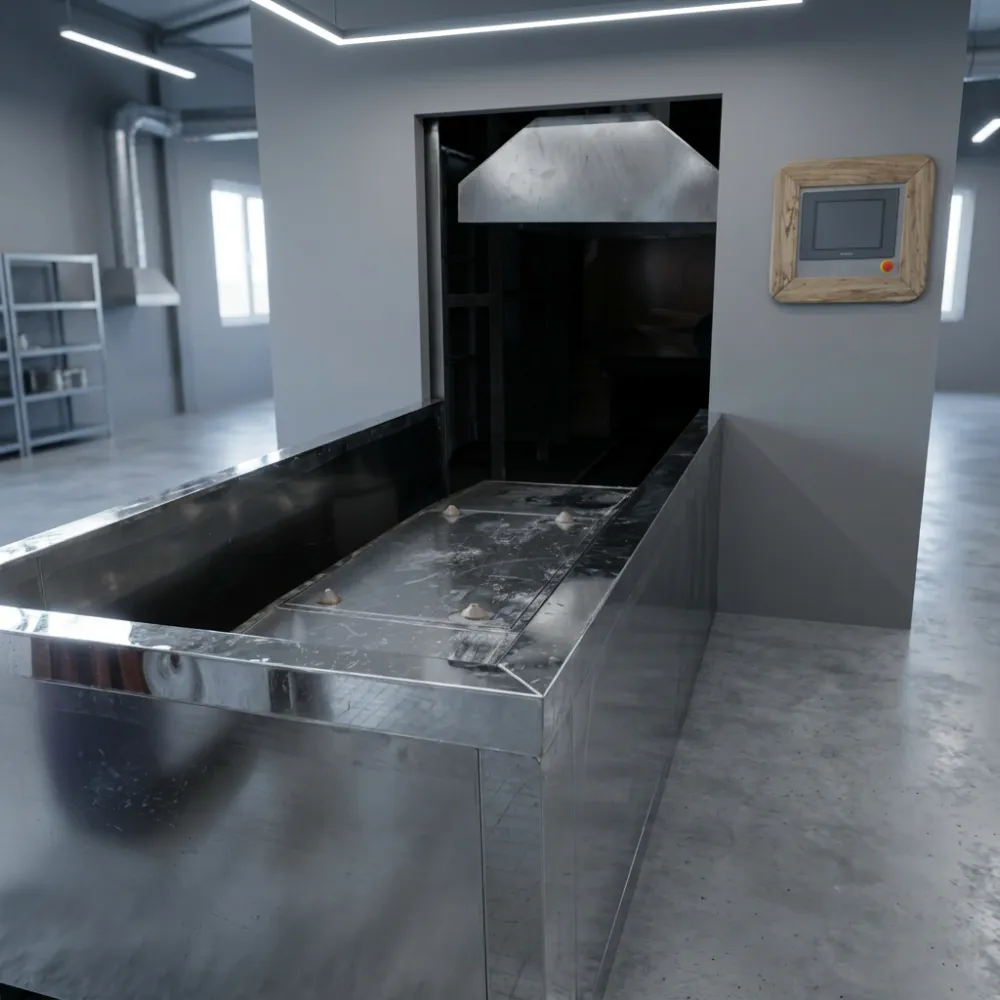
A complete FAT program for a cremation system covers five areas: documentation review, mechanical inspection, functional testing, combustion testing, and shipping readiness. Each area answers a different question, and all five must pass before the equipment is released for transport.
Documentation review confirms that what was ordered is what was built — component specifications, material certificates, and control system versions. Mechanical inspection verifies physical dimensions, weld quality, insulation installation, and the integrity of doors, hinges, and seals. Functional testing exercises the control system, interlocks, and safety circuits without firing the burner.
Combustion testing is the heart of FAT: a witnessed test burn that demonstrates the machine reaches temperature, completes a cycle, and produces emissions within the expected range. Finally, shipping readiness checks packaging, lifting points, marking, and the completeness of the shipment. Skipping any of the five weakens the guarantee that the delivered machine will work as intended.
2. When to Conduct FAT: Before, During, or After Manufacturing
The timing of FAT determines how much can be corrected. A single inspection at the end of manufacturing catches finished defects, but corrective action is slow and expensive. A staged approach, with inspections at key milestones during manufacturing, catches problems while they are still cheap to fix.
A practical staged program for a cremation furnace looks like this. The first stage, after raw material receipt, verifies material certificates — stainless grades, refractory batches, and burner specifications. The second stage, after fabrication, checks shell dimensions, weld quality, and refractory installation against the drawings. The third stage, at completion, runs the full functional and combustion tests.
For most buyers, attending all three stages is impractical due to travel and cost. The common compromise is an interim inspection by an independent inspector at the fabrication stage, followed by the buyer's own attendance at the final FAT. Hunan Jinjiben Trading Co Ltd follows this pattern for its international customers, coordinating the interim inspection and hosting the final FAT.
3. Documentation Review: What to Check First
Documentation is the cheapest inspection there is, because it requires no equipment access. The review should confirm that the machine to be built matches the agreed specification in every substantive detail. The table below lists the documents typically requested and what to verify in each.
| Document | What to Verify |
|---|---|
| Approved drawings | Dimensions, materials, and layouts match the quotation |
| Material certificates | Stainless grades, refractory batches, burner models |
| Component datasheets | Burner, PLC, fans, valves match approved brands and models |
| Electrical schematic | Voltage, frequency, phase, and protection devices |
| Test certificates | Welder qualifications, pressure tests, calibration records |
| Operating manual | Language, completeness, and match to the delivered control system |
A common finding in documentation review is a component substitution — a valve, burner, or controller swapped for an alternative without approval. Substitutions are not always wrong; sometimes they are upgrades or supply-driven changes. The point of the review is that substitutions are made visible and approved rather than discovered after delivery.
4. Mechanical and Dimensional Inspection
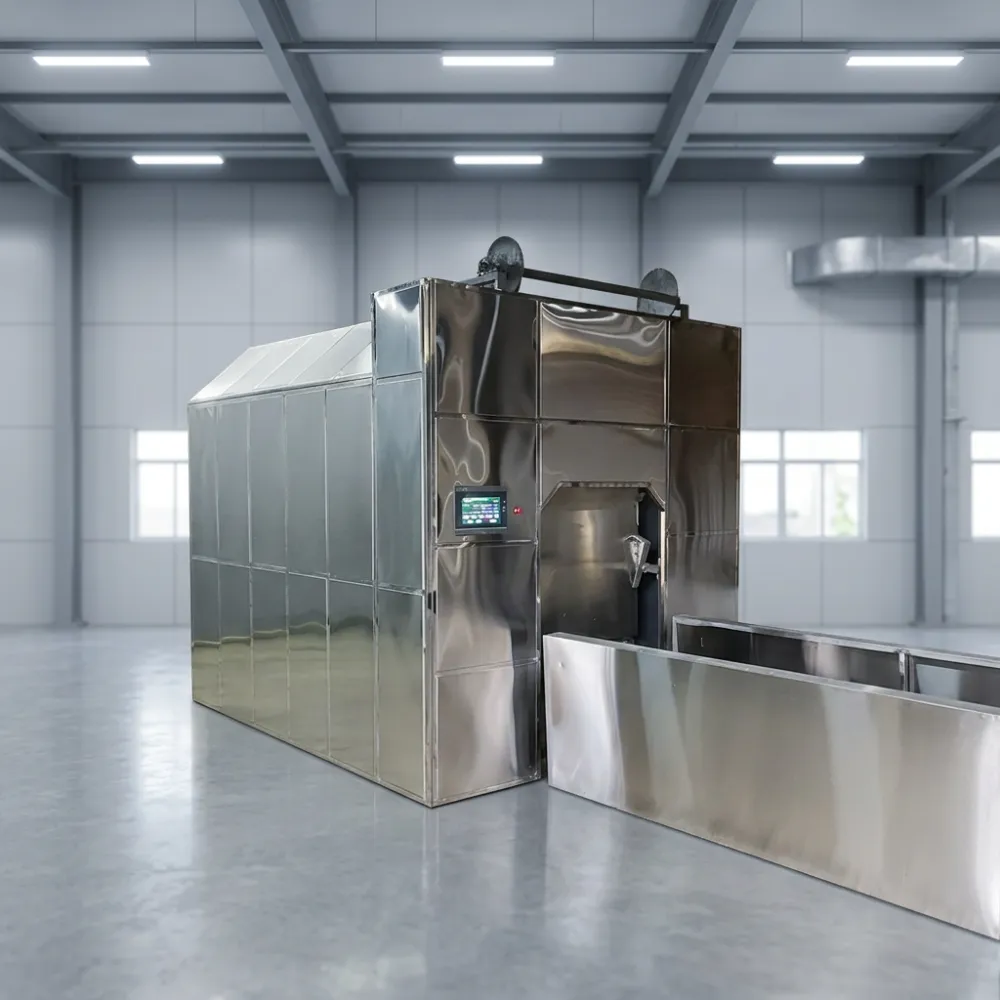
Mechanical inspection verifies that the physical equipment matches the drawings and is soundly built. Dimensional checks confirm critical measurements: chamber internal dimensions, door openings, flue connections, and the position of mounting and lifting points. A machine that is 50 millimeters wider than the design can fail to fit through a door or onto a transport frame.
Weld quality deserves focused attention on load-bearing components — the shell, door frames, and flue supports. Visible defects such as undercut, porosity, and incomplete penetration should be recorded and rectified before shipment. Refractory installation is inspected for joint gaps, expansion allowance, and the integrity of arch and wall sections.
Moving parts receive their own checks. Doors should open, close, and seal evenly across their full perimeter. Hinges and latches should operate without binding.
The charging mechanism — trolley, ram, or conveyor — should travel its full range smoothly. These checks take minutes at the factory and reveal issues that would take days to resolve on site.
5. Functional Testing: Cold Tests and Control System Checks
Before any fire, the control system is exercised through a cold test sequence. This verifies that the PLC, sensors, interlocks, and safety circuits operate as designed. The test simulates the control logic without combustion, so faults can be found safely and cheaply.
Typical cold tests include: power-up and startup sequence, alarm and fault detection for each sensor, burner ignition interlock logic, door-open safety shutdown, fan rotation and direction, damper and valve actuation, and emergency stop function. Each test should be documented with the observed result and any corrective action.
The cold test also verifies configuration details that surface at this stage: the control language, units of measurement, time and date settings, and any destination-specific parameters such as grid frequency or emission data logging format. Catching a language or unit mismatch at FAT is trivial; catching it at commissioning is disruptive.
6. The Test Burn: Witnessing Actual Combustion
The test burn is the moment when the machine demonstrates that it can actually cremate. It is typically performed with surrogate material — inert load or, where permitted, a supervised test protocol — because the purpose is to verify thermal performance, control stability, and emissions, not to handle real cases.
During the test burn, the observer should verify the parameters in the table below and compare them with the specification. Discrepancies beyond stated tolerances must be resolved before sign-off.
| Test Parameter | Expected Outcome |
|---|---|
| Heat-up time to operating temperature | Within specified range |
| Chamber temperature stability | Steady within control tolerance |
| Burner modulation behavior | No unstable cycling |
| Flue gas temperature profile | Within design range |
| Door seal performance | No visible leakage or smoke |
| Control system logging | Complete temperature and event records |
A test burn also validates the operator experience. The observer should note how easily the loading, ignition, and ash handling sequences are performed, and whether the control interface behaves as documented. These practical observations are often as valuable as the numeric results.
7. Emission Testing and Data Review
For machines intended for regulated markets, emission measurement is part of FAT. The extent depends on the destination requirements: some buyers arrange an independent stack test at the factory, while others accept the manufacturer's internal measurements with calibration certificates. Either way, the results establish a baseline that the destination authority can compare with its own testing later.
The pollutants measured typically include particulate matter, carbon monoxide, nitrogen oxides, and, where mercury control is fitted, mercury concentration. Sampling must follow the destination's test method, because different standards use different reference conditions and units. A result expressed in one standard's reference oxygen level cannot be directly compared with another's.
Buyers should request the raw data, not just a summary. Temperature logs, emission readings, and event records from the test burn become the reference point for future troubleshooting and for defending the installation during permitting. We recommend at Jinjiben Trading that clients archive these records with the operating manual.
8. Packaging, Marking, and Shipping Readiness
FAT ends with verification that the equipment will survive transport. Cremation machines are heavy, vibration-sensitive assemblies, and packaging decisions made at the factory determine whether the machine arrives intact. The inspection covers lifting points, blocking and bracing, moisture protection, and the completeness of all crates and containers.
Marking is a surprisingly common source of delay. Each crate must be marked with the shipment reference, gross weight, lifting instructions, and handling symbols. The packing list must match the actual contents of every crate, because customs clearance and site logistics depend on that match. A packing list error can hold a shipment at the port for days.
Spare parts and accessories should be checked against the agreed list at this stage, since missing items are difficult to resolve after the container is sealed. Every item — from spare gaskets to the tool kit — should be verified against the packing list and the purchase agreement. In the FAT checklists we run at Jinjiben, this line-by-line verification is completed before any crate is sealed.
9. FAT Reports, Punch Lists, and Sign-Off
A FAT stands or falls on its record. At the end of the program, the buyer should receive a FAT report covering all five inspection areas, the test results, photographs, and any deviations found. The report becomes the reference document for commissioning and for warranty discussions later.
Outstanding issues are captured in a punch list — a numbered list of items to be corrected before shipment, with agreed dates. Minor items may be cleared after the buyer leaves, subject to photographic evidence and confirmation. Major items — anything affecting safety, compliance, or function — should be resolved and re-tested before the equipment is released.
Sign-off is the buyer's confirmation that the equipment is accepted for shipment. It does not waive warranty rights, but it does mean the machine was inspected and found acceptable at the agreed standard. At Jinjiben, we have seen this pattern across many projects: buyers who attend FAT in person, or who delegate it to a qualified inspector, consistently report fewer surprises at commissioning than those who rely on shipment photos alone.

10. Frequently Asked Questions About Factory Acceptance Testing
10.1 Is factory acceptance testing required for cremation equipment?
Factory acceptance testing is not legally required in most destinations, but it is strongly recommended for cross-border purchases. FAT is the single point where problems can be found while the equipment is still at the factory, where tools, parts, and technicians are available. Most international buyers treat FAT as a standard clause in the purchase agreement for exactly this reason. The cost of attending or delegating an inspection is small relative to the cost of resolving a defect after international shipment.
10.2 What if the buyer cannot attend the FAT in person?
Buyers can delegate FAT to an independent inspection company with experience in industrial equipment, or to a trusted sourcing partner. A video-witnessed test burn with real-time data sharing is a practical middle option. The key is that someone with technical authority reviews the results and signs off on the report before shipment is released.
10.3 Can a test burn be performed at the factory?
Factories that build cremation equipment typically have test facilities with chimneys and emission measurement equipment, so a full burn test is usually possible. The test uses surrogate material rather than real cases, and its purpose is to verify thermal performance, control stability, and emissions against the specification. Buyers should confirm test facilities exist before ordering, since not every factory can perform a full burn test. A factory without a test chimney should raise a question about the quality control process behind its previous shipments.
10.4 What happens if defects are found during FAT?
Defects are recorded in a punch list with agreed correction dates. Minor items can be corrected and confirmed with photographic evidence; major items affecting safety, compliance, or function must be re-tested before shipment. If agreement cannot be reached, the buyer's payment schedule should include a holdback tied to FAT sign-off, which gives the buyer leverage to ensure corrections are completed.
Recently Posted
-
Cremation Solutions for Rural and Remote Funeral Homes: Low-Infrastructure Equipment Options
September 4, 2026Not long ago, a funeral home in a rural district several hours from the nearest large city faced a dilemma. The community had deci Read More
 -
International Emission Standards for Cremation: EU Directive 2010/75/EU, US EPA, and China GB 13801
September 3, 2026Some time ago, a buyer in Latin America ordered a cremation furnace that met the emission limits of his own country' Read More
 -
Stainless Steel in Cremation Equipment Construction: Grade Selection for Durability and Corrosion Re
September 3, 2026A while back, an operator in a coastal city reported recurring pitting on the outer shell of a cremator that was just four years o Read More
 -
Cremation Equipment Categories: Stationary, Mobile, and Container-Based Systems Compared
September 2, 2026Some time ago, a regional funeral association in Southeast Asia purchased a stationary cremator for a community that had just appr Read More

Contact Us
Recommended Products
-
 Human Cremation Machine Electric Crematorium Machine With 100kg/H Capacity and 18kw Power Crematory EquipmentNegotiableMOQ: 1 Piece
 -
220V/380V Full Automatic Human Crematorium Cremation Machine New Crematory Furnace 18kW Power PLCNegotiableMOQ: 1 Piece
-
New Full Automatic Human Crematory Incinerator Oven No Smoke Cremation Machine Crematory Equipment Crematorium MachineNegotiableMOQ: 1 Set
-
Electric Human Crematorium Machine Full Automatic Cremation Incinerator Indonesia Extra Large Coffin Cremation Electric Human Crematory MachineNegotiableMOQ: 1 Piece
-
Extra Large Coffin Cremation Machine New Technology Human Crematorium Furnace Full Automatic 100kg/h 5-Year WarrantyNegotiableMOQ: 1 Set

-
Human Cremation Machine for Sale Full Automatic Model USA TypeNegotiableMOQ: 1 Set
-
220V/380V Full Automatic Human Crematorium Cremation Machine Crematory Furnace 18kW Power PLC ControlNegotiableMOQ: 1 Set
-
Automatic Human Cremation Machine No Smell No Smoke Latest Human Cremation Technology 50/60HZ Diesel LPG CremationNegotiableMOQ: 1 Set
-
Automatic Human Crematorium Incinerator Crematory Furnace Human Cremation Machine for Wood Coffin CremationUS$ 66000MOQ: 1 Set
-
Electric Human Crematory Machine Cremation Machine No Smoke Crematorium Incinerator Cremation EquipmentUS$ 55000MOQ: 1 Combo
-
220V/380V Full Automatic Human Crematorium Cremation Machine New Crematory Furnace 18kW Power PLC Core Refractory Material 1NegotiableMOQ: 1 Set
-
Cremation Machine Burn Human Body Electrical Crematorium Machine Cremator Crematoria Europe StandardUS$ 5MOQ: 1 Set
-
Cremation System Cremation Oven Fired by Natural Gas no Smoke Human Crematorium Incinerator Crematory EquipmentNegotiableMOQ: 1 Piece
-
Cremation Equipment for Sale Eu Standard Environmental Friendly no Smoke Quick Burning Fast Short Time Cremation Machine No SmellUS$ 1 - 10MOQ: 1 Set
-
Crematorium Oven Machine Container Burn Human Body Mobile Furnace for Sale Crematory Incinerator Cremation Machine Crematory EquipmentUS$ 1 - 10MOQ: 1 Set



-
Container Crematory System Burn Human Death Body Crematoria Emergency Human Cremation Machine Crematorium IncineratorUS$ 1 - 10MOQ: 1 Set
-
Cremation Machine for Australia Market no Smell Human Crematory Machine Automatic Loading Conveyor Cremation EquipmentNegotiableMOQ: 1 Set
-
Global Top Supplier of Crematory Equipment Human Cremators Crematory Equipment Cremation Unit no Smell no SmokeNegotiableMOQ: 1 Kilogram
-
Cremation Machine Human Crematory Burner Equipment Furnace on Wheels Cremation Machine no Smoke USA StandardUS$ 1 - 10MOQ: 1 Piece
-
Automatic Cremation Machine Crematory Equipment for Human Crematorium Equipment Europe Standard EmissionUS$ 1 - 10MOQ: 1 Piece